
The Boston Post Cane
A New England Tradition in Island Falls
In 1909, Edwin Atkins Grozier sent gold-headed ebony canes to 700 towns in New England, with the request that they be presented to the oldest male citizen of the town. The cane was to be used by the recipient for as long as they lived, and upon their death, it would be passed to the next oldest citizen. Nowadays, the Boston Post Cane Award is a cherished tradition that continues to honor the oldest residents of New England towns, regardless of gender.
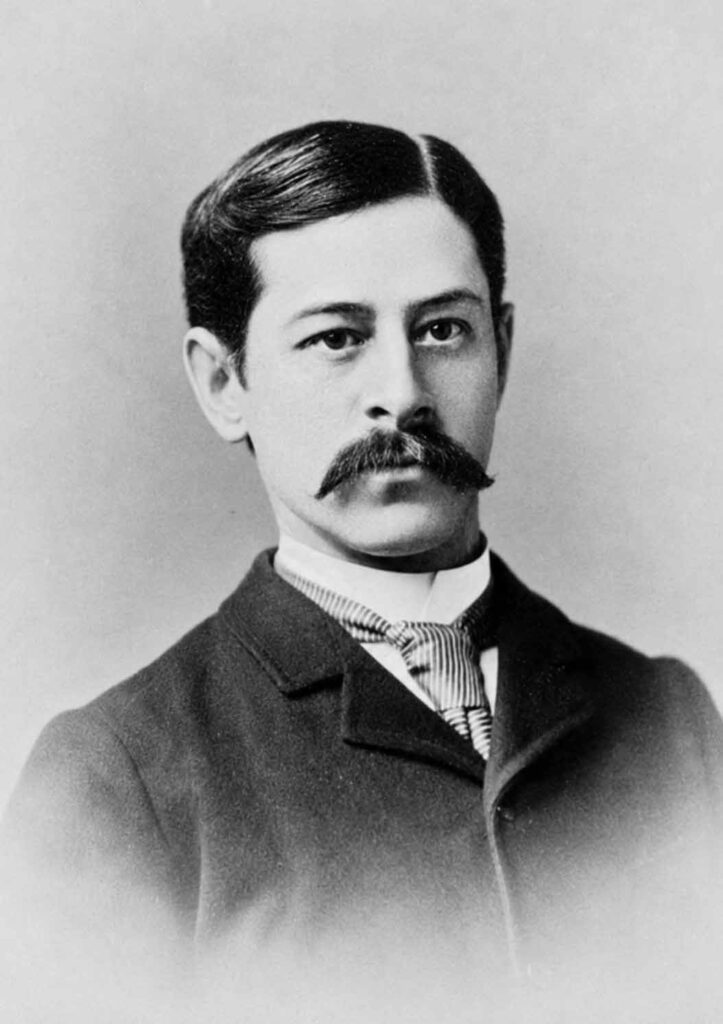
A Publicity Stunt That Became a Beloved Tradition
The Boston Post Cane began, fittingly enough, as a marketing gimmick. Edwin Atkins Grozier, a former secretary to Joseph Pulitzer, took over the struggling Boston Post in 1891 and spent years building it into one of New England’s most widely read newspapers. In August 1909, looking for a promotional idea that would generate goodwill and headlines across the region, Grozier purchased a large lot of ebony canes and had them fitted with engraved 14-karat gold heads. He then mailed one to the Board of Selectmen in roughly 700 small towns across Massachusetts, New Hampshire, Maine, and Rhode Island — deliberately excluding cities.
Each cane was cut from ebony shipped in seven-foot lengths from the Congo, then seasoned for six months and turned on a lathe before being finished by the New York manufacturer J.F. Fradley & Co. The gold head, roughly two inches long, was hand-engraved with the words “Presented by the Boston Post to the oldest citizen of [Town Name] — To Be Transmitted.” Grozier’s instructions were specific: the cane belonged to the town, not the recipient, and was to be presented to the oldest male citizen for use during his lifetime, then handed back to the town’s selectmen upon his death for transfer to the next oldest citizen.
The stunt worked. Newspaper circulation for the Post climbed steadily in the following years, and towns across New England embraced the tradition with genuine civic pride, even as some elderly recipients grumbled that the cane was merely a loan and, for the superstitious, a none-too-subtle reminder of their own mortality.
Opening the Tradition to Women
For its first two decades, the cane was restricted to men only. That changed after the 19th Amendment secured women’s right to vote in 1920, and mounting public pressure eventually forced the issue. By the late 1930s, following considerable local debate in many towns, eligibility was extended to women as well. Today women receive the honor more often than men, reflecting greater female longevity, and most communities, including Island Falls, now recognize the town’s oldest resident regardless of gender.
Grozier died in 1924, and his son Richard took over the paper but could not sustain its success; the Boston Post ceased publication in 1957. Yet the cane tradition it started outlived the newspaper itself. Of the roughly 700 original canes distributed, many were eventually lost, stolen, or never returned to town selectmen. Only a few hundred are confirmed to still exist. Maine holds the largest surviving share of any state, and many towns, including Island Falls, still keep the honor alive, sometimes with a replica cane while the original is preserved for safekeeping.
Island Falls Recipients
Island Falls has carried on the tradition, presenting the Boston Post Cane to its oldest resident over the years. Recipients have included:
- Alice Leavitt
- Herbert Mathers, Sr.
- Wilson Foss Palmer
- Mildred Cameron Kennard
- Frank Dudguay
- Nancy Sewall Cunningham
- Gertrude White Spearin
- Helen Mitchell Sherman
- Talmadge Strait
- Mary Erskine Palmer
- Clara Campbell Hathaway
- John Webb
The 2026 recipient is Merylene Ryan, age 92, carrying on a tradition that’s now well over a century old. The Boston Post Cane continues to connect Island Falls with a piece of New England newspaper history and to the generations of residents who have called the town home.
Sources
- “Origins of the Tradition,” Boston Post Cane Information Center: https://bostonpostcane.org/origins-of-the-tradition
- “The Boston Post Cane,” Needham History Center & Museum: https://needhamhistory.org/the-boston-post-cane/
- “Boston Post Cane,” Town of Douglas, MA: https://douglas-ma.gov/246/Boston-Post-Cane
- “The Boston Post Cane,” Dover Historical Society: https://doverhistoricalsociety.org/the-boston-post-cane/
- “Boston Post Cane Tradition,” Bethlehem Historical Society: https://bethlehemhistoricalnh.org/boston-post-cane-tradition/
- “Boston Post Cane,” Acton-Shapleigh Historical Society: https://www.actonshapleigh.org/boston-post-cane
- “Edwin Grozier,” Wikipedia: https://en.wikipedia.org/wiki/Edwin_Grozier